Do water filters remove lead? Yes. Certain water filters can significantly reduce lead in drinking water, but not every filter is designed to do so. Look for a system that is independently certified specifically for lead reduction, and follow the manufacturer’s instructions for installation, use and filter replacement.
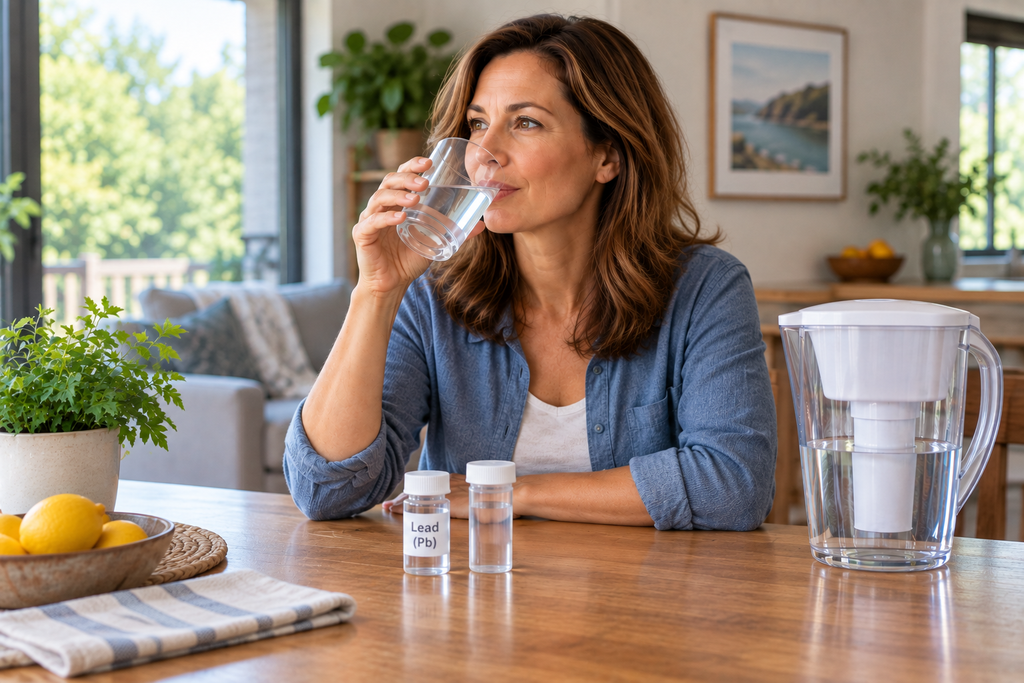
Table of Contents
Why Lead in Drinking Water Is Dangerous
Lead can enter drinking water when plumbing materials that contain lead corrode. Possible sources include lead service lines, older pipes, solder, faucets and other plumbing fixtures. Because lead cannot be reliably detected by taste, smell or appearance, testing is the best way to know whether it is present in your water.
Lead exposure can cause serious health effects, and children, infants and pregnant women are among those of greatest concern. The EPA states that there is no known safe level of lead in a child’s blood, which is why suspected lead contamination should be taken seriously. If testing shows lead in your drinking water, reducing exposure while also identifying the source is important.
Do Water Filters Remove Lead?
Yes. Water filters can reduce lead in drinking water when the specific filter is designed and certified for lead reduction. Options can include certain faucet filters, pitcher filters and reverse osmosis systems, but the filtration technology alone does not guarantee that a particular product will reduce lead.
Check the product’s certification and performance claims before buying. For example, NSF/ANSI 53 covers health-related contaminant reduction claims such as lead for certified drinking-water filters, while NSF/ANSI 58 applies to reverse osmosis systems. The important point is to confirm that the specific filter or system has a certified lead-reduction claim, rather than assuming that every carbon or reverse osmosis product removes lead.
Types of Filters That Remove Lead
Several types of drinking-water filters can reduce lead, but effectiveness depends on the specific product and its certified contaminant-reduction claims. Rather than choosing a filter based only on the technology it uses, check that the model has been independently certified specifically for lead reduction.
Reverse Osmosis Systems
Reverse osmosis systems use a semipermeable membrane as part of a multi-stage treatment process and can reduce lead along with many other contaminants. However, not every reverse osmosis system carries the same contaminant-reduction claims, so if lead is your concern, look for a system with a certified lead-reduction claim, such as one evaluated under NSF/ANSI 58.
Activated Carbon Filters
Some activated carbon filters can reduce lead, but carbon filtration alone does not mean a product is suitable for lead removal. Performance varies between products, so homeowners concerned about lead should look for a filter with an independent certification that specifically includes lead reduction.
NSF-Certified Filters
When choosing a filter for lead, look beyond a general “NSF certified” label. Certification applies to specific standards and contaminant-reduction claims, so check that the particular model is certified specifically for lead reduction. For many drinking-water filters this may be a lead-reduction claim under NSF/ANSI 53, while reverse osmosis systems may carry the relevant claim under NSF/ANSI 58.
Choosing the Right Water Filter
If lead is a concern in your home, start by finding out whether lead is actually present and, if possible, where it is entering the water. Lead can come from service lines, household plumbing, solder, faucets and other fixtures, so a filter can reduce exposure at the tap without fixing the underlying source of contamination.
When choosing a filter, check that the specific model is independently certified for lead reduction and make sure its capacity and installation type suit your household. Follow the manufacturer’s instructions carefully, because cartridges that are not replaced on schedule may no longer provide the expected level of contaminant reduction.
You can also compare different filtration technologies in our guide to reverse osmosis vs carbon water filters.
How to Check if Water Filters Remove Lead
If you are buying a filter because of lead concerns, check the product packaging, manufacturer information or certification listing for a specific lead-reduction claim. A general statement such as “NSF certified” is not enough on its own because certification can apply to different standards and contaminants.
Before buying, check the certification information for the exact model rather than relying only on the filter type or advertising claims. Two products that look similar may be certified for different contaminants, so make sure lead reduction is specifically included for the filter you choose.
Once the filter is installed, follow the manufacturer’s instructions for use and cartridge replacement. A filter that is used beyond its rated capacity or replacement schedule may not provide the contaminant reduction expected from its certification, so regular maintenance is an important part of protecting your drinking water.
What Should You Do if You Suspect Lead in Your Water?
If you suspect lead in your drinking water, testing can help determine whether lead is present and guide your next steps. Contact your water utility or local health authority for information about testing and whether your home may have a lead service line. If you use a filter while the issue is being investigated, choose one that is independently certified specifically for lead reduction and follow its instructions carefully.
You can also reduce potential exposure by using cold tap water for drinking and cooking, because hot water can contain higher levels of lead from plumbing. Regularly clean your faucet aerator, where particles containing lead can sometimes collect, and remember that filtration can reduce exposure at the tap but does not replace addressing the underlying source of lead.
Can Boiling Water Remove Lead?
No. Boiling water does not remove lead and can actually concentrate lead slightly as some of the water evaporates. If lead is a concern, boiling should not be used as a substitute for an appropriately certified lead-reduction filter or other suitable action.
For drinking and cooking, use cold water from the tap rather than hot water because hot water can contain higher levels of lead from plumbing. If you are using a certified filter, follow its instructions carefully, including any guidance about water temperature and cartridge replacement.
Final Thoughts
Lead in drinking water should be taken seriously, but the right filter can help reduce exposure while the source of the lead is investigated or addressed. Choose a filter that is specifically certified for lead reduction, use it according to the manufacturer’s instructions, and replace cartridges on schedule.
Remember that filtration treats the water at the point where the filter is installed; it does not remove a lead service line or repair lead-containing plumbing. If you suspect lead in your water, testing can help you understand the problem and choose an appropriate response rather than relying on filtration alone.
If you are looking for a system that can reduce contaminants like lead, see our guide to the Best Water Filter for Home Use in 2026.