Best water filter for well water systems can help remove sediment, iron, sulfur odors, and other contaminants commonly found in private wells. Choosing the right filtration system depends on your water quality, household needs, and the specific issues affecting your well water.
Choosing the right water filter for well water can significantly improve water quality, taste, and peace of mind for homeowners who rely on private wells.
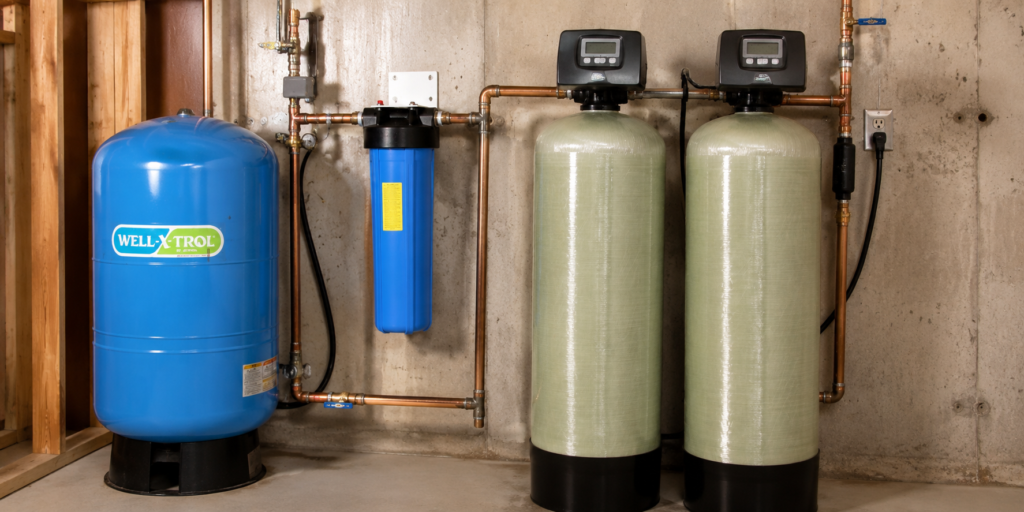
Table of Contents
Common Problems With Well Water
Unlike city water, well water is not treated by a municipal system. This means homeowners are responsible for managing their own water quality.
Some of the most common well water issues include:
• Sediment and dirt
• High iron levels
• Sulfur odors (rotten egg smell)
• Hard water minerals
A properly chosen filtration system can help improve taste, reduce staining, and provide cleaner water throughout the home.
Types of Water Filters for Well Water
Different filtration systems are designed to target different contaminants commonly found in well water.
Sediment Filters
Sediment filters remove sand, dirt, rust, and other particles that may enter well water from underground sources.
Sediment filters are often used as the first stage of treatment because they help prevent larger particles from clogging other filtration systems. Homes with cloudy water or visible grit may benefit from a high-capacity sediment filter.
Iron Filters
Iron filters are designed to reduce high levels of iron that can stain sinks, toilets, and laundry.
If your water leaves reddish-brown stains or has a metallic taste, an iron filter may be necessary. Some systems can also help reduce manganese, which can cause black staining around fixtures.
Whole House Filtration Systems
Whole house systems filter water as it enters your home, helping protect plumbing and appliances while providing cleaner water throughout the house.
These systems are especially useful for families that rely entirely on well water because they treat every tap in the home, including showers, washing machines, and dishwashers.
How to Choose the Best Water Filter for Well Water
When choosing a filter for well water, consider the following factors:
• The specific contaminants in your water
• Filter capacity and maintenance requirements
• Installation type (under sink or whole house)
Some homeowners only need a simple sediment filter, while others may require a combination of sediment, iron, and reverse osmosis filtration. Understanding your water test results is the best way to avoid buying a system that does not address your specific water problems.
Water testing can help determine which filtration system is most appropriate for your situation.
The best water filter for well water will depend on the specific contaminants found in your water supply.
Why Water Testing Is Important for Well Water
Before purchasing any filtration system, it is a good idea to test your well water. Water testing can identify contaminants such as iron, manganese, bacteria, nitrates, sulfur, and hard water minerals.
Without testing, it can be difficult to choose the correct filtration system. A filter designed for sediment may not solve iron problems, while an iron filter may not address bacterial contamination.
Many homeowners test their well water annually to ensure water quality remains safe and to help determine whether their filtration system is performing properly.
The EPA provides additional guidance for private well owners and water testing.
Best Filtration Setup for Most Well Water Homes
For many households, a combination of filtration methods provides the best results.
A typical well water filtration setup may include several stages of treatment designed to target different contaminants.
• Sediment filter for dirt and sand
• Iron filter if iron staining is present
• Carbon filter to improve taste and odor
• Reverse osmosis system for drinking water
This layered approach helps target multiple contaminants while providing cleaner, better-tasting water throughout the home.
Reverse osmosis systems are a popular option for homeowners who want cleaner drinking water from a private well, especially when sediment, heavy metals, or other contaminants are a concern.
If your well water contains high levels of contaminants, a whole-house filtration system may provide the most comprehensive protection.
How Often Should Well Water Be Tested?
Regular water testing is an important part of maintaining a private well. Unlike municipal water supplies, well water is not routinely monitored by a local water authority.
Many experts recommend testing well water at least once a year for common contaminants and changes in water quality. Additional testing may be needed if you notice changes in taste, odor, color, or water pressure.
Testing helps identify potential problems early and ensures your filtration system is designed to address the contaminants present in your water supply.
Regular testing can also help protect plumbing, appliances, and overall household water quality.
Final Thoughts
Well water can contain a variety of natural minerals and contaminants, but the right filtration system can greatly improve water quality. Understanding your specific water conditions is the first step toward choosing the best water filter for well water.
To compare popular filtration systems, read our guide to the Best Water Filter for Home Use in 2026.