How to test water quality at home is one of the best ways to understand what’s in your drinking water before investing in a filtration system. Whether you’re concerned about changes in taste, smell or appearance, or simply want peace of mind, testing your water helps you make informed decisions based on facts rather than guesswork.
If you’ve ever wondered whether your tap water is truly safe to drink, you’re not alone. Many homeowners notice changes in taste, smell or appearance, while others simply want reassurance that the water their family drinks every day is safe.
Testing your water doesn’t have to be complicated. Whether you choose an affordable home test kit or professional laboratory analysis, the results can help you identify potential problems and choose the right solution if treatment is needed.
Learning how to test water quality at home gives you the information you need to make confident decisions about your drinking water. Whether the results show everything is normal or indicate that further testing or treatment may be needed, you’ll be in a much better position to choose the right solution for your home.
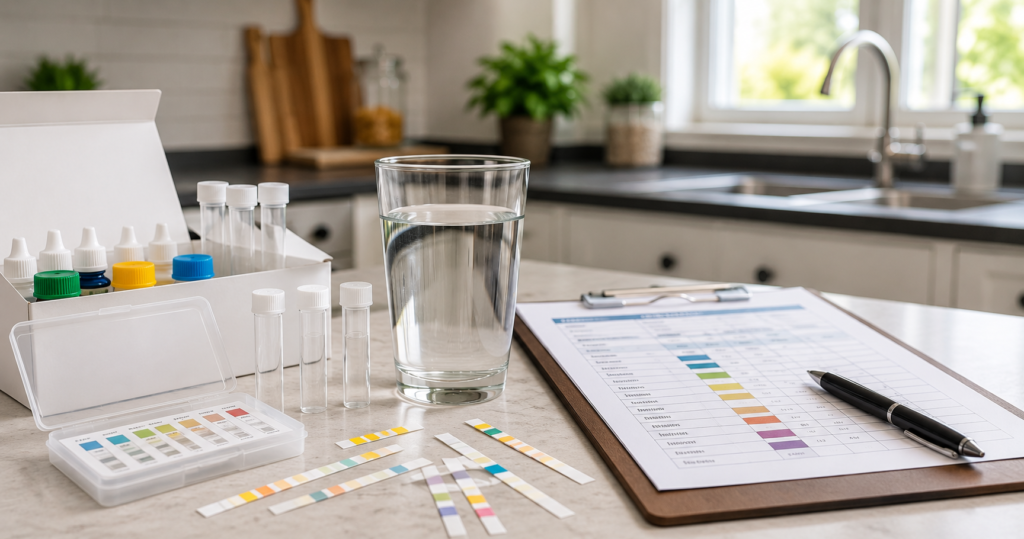
Table of Contents
How to Test Water Quality at Home: Why Testing Matters
Clear water isn’t always clean water. Many contaminants that affect drinking water cannot be seen, smelled or tasted, while harmless issues can sometimes make water look or taste unusual.
Testing helps answer important questions such as:
- Is my drinking water safe?
- Has my water quality changed?
- Should I install a water filter?
- Which type of filtration system is right for my home?
- Do I need professional advice?
Testing before purchasing a filtration system can also save money. Different filters are designed to reduce different contaminants, so understanding what is actually in your water makes it much easier to choose the right treatment.
When Should You Test Your Water?
While municipal water supplies are regularly monitored, there are situations where testing your own water is a sensible precaution.
You should consider testing if:
- Your water suddenly changes taste, smell or colour.
- You rely on a private well.
- You’ve moved into an older home.
- Plumbing work has recently been completed.
- Local authorities have reported changes to the water supply.
- Someone in your household has health concerns that make water quality especially important.
- You’re planning to install a water filter but aren’t sure which type you need.
Even if your water seems perfectly normal, occasional testing can provide peace of mind and help identify changes before they become bigger problems.
Knowing how to test water quality at home allows you to monitor changes over time and respond more confidently if your drinking water quality changes.
Home Water Test Kits
Home water test kits are an affordable way to screen for common water quality issues.
Most use test strips or small chemical reagents that react to substances in the water. Depending on the kit you choose, it may check for:
- pH
- Hardness
- Chlorine
- Iron
- Copper
- Nitrates
- Nitrites
- Total dissolved solids (TDS)
Results are usually available within a few minutes, making these kits a convenient starting point for homeowners who want a general overview of their water quality.
However, it’s important to understand their limitations. Home test kits are designed as screening tools. While they can indicate that a problem may exist, they generally don’t provide the same level of accuracy as professional laboratory testing.
Laboratory Water Testing
If you want the most accurate assessment of your drinking water, laboratory testing is the gold standard.
Accredited laboratories analyse water samples using specialised equipment capable of detecting many contaminants at very low levels. Depending on the testing package, results may include information about heavy metals, bacteria, nitrates, arsenic, pesticides, mineral content and other substances relevant to your local area.
Laboratory testing is especially worthwhile if you use private well water, suspect contamination or need reliable results before deciding on an expensive water treatment system.
Although laboratory testing costs more than a basic home kit, it provides much more detailed information and helps remove uncertainty when important health decisions are involved.
Which Testing Method Should You Choose?
The right choice depends on what you’re trying to achieve.
If you simply want a quick check of common water quality indicators, a home test kit is usually a practical first step.
If the kit suggests a possible problem, if your water has persistent issues, or if you’re concerned about contaminants such as lead, arsenic or bacteria, professional laboratory testing is the better option.
Many homeowners use both approaches together. A home test kit provides an initial snapshot, while laboratory analysis confirms the findings and delivers the detailed information needed to make confident decisions about water treatment.
Home Water Test Kit vs Laboratory Testing
| Feature | Home Water Test Kit | Laboratory Testing |
|---|---|---|
| Cost | Lower | Higher |
| Results | Usually within minutes | Usually several days |
| Accuracy | Good for screening | Highly accurate |
| Best for | General home checks | Confirming specific contaminants |
| Tests Available | Common water quality indicators | Comprehensive contaminant analysis |
For many homeowners, starting with a home test kit is a practical first step. If the results suggest a potential issue or you want greater confidence, laboratory testing can provide the detailed information needed before investing in a water treatment system.
How to Collect an Accurate Water Sample
Whether you’re using a home kit or sending a sample to a laboratory, collecting the water correctly is important. Poor sampling can affect the accuracy of the results.
Follow these simple tips:
- Read the instructions before collecting your sample.
- Use the clean container supplied with the kit or laboratory.
- Avoid touching the inside of the container or lid.
- If instructed, let the tap run for the recommended time before filling the container.
- Seal the sample immediately after collection.
- If sending the sample to a laboratory, return it as soon as possible according to their instructions.
Taking a few extra minutes to collect the sample correctly helps ensure the results reflect your actual water quality.
Understanding Your Results
Receiving a water test report can feel overwhelming, especially if it contains unfamiliar terms or measurements.
Remember that not every result outside the ideal range means your water is unsafe. Some results relate to taste, odour or appearance, while others may indicate contaminants that require further investigation.
If your results identify a specific contaminant, the next step is to choose a treatment method designed to reduce that particular problem. No single water filter removes every contaminant, which is why testing first can save both money and frustration.
If you’re unsure how to interpret your results, your local water supplier, health authority or the testing laboratory may be able to explain what the findings mean and whether any action is recommended.
Once you understand how to test water quality at home, you’ll be better prepared to interpret your results and decide whether further testing or a water treatment system is necessary. Testing first helps you make informed decisions based on your home’s actual water quality rather than guesswork.
Common Mistakes to Avoid
When testing drinking water, homeowners often make a few common mistakes.
- Assuming clear water is always safe.
- Relying on taste or smell alone to judge water quality.
- Choosing a water filter before knowing what needs to be removed.
- Ignoring changes in water quality because they seem temporary.
- Treating a home test kit as a replacement for professional laboratory testing when serious contamination is suspected.
Testing first allows you to make informed decisions instead of guessing.
Frequently Asked Questions
How often should I test my drinking water?
If you’re supplied by a public water system, testing every few years or whenever you notice changes is often sufficient. Private well owners should test more regularly because they are responsible for monitoring their own water quality.
Are home water test kits accurate?
Home kits are useful screening tools and can identify many common water quality issues. However, laboratory testing provides more accurate and comprehensive results, particularly when testing for health-related contaminants.
Can I tell if my water is contaminated by looking at it?
No. Many contaminants have no taste, smell or colour. Water that looks perfectly clean can still contain substances that require treatment.
How can I test water quality at home before buying a filter?
The best way to test water quality at home is to begin with a quality home water test kit. It offers a convenient way to screen for common water quality issues and can help you determine whether professional laboratory testing or additional water treatment is the appropriate next step.
Recommended Product
If you’d like to understand what’s in your drinking water before investing in a filtration system, the VARIFY 17-in-1 Complete Drinking Water Test Kit – 100 Strips + 2 Bacteria Tester Kits is an excellent place to start.
It checks a wide range of common water quality indicators, is easy for homeowners to use, and provides quick results that can help you decide whether further laboratory testing or water treatment is needed.
Related Reading
If your water test shows that treatment may be necessary, our guide to Best Water Filter for Home Use explains the different filtration systems available and how to choose the right one for your household.
Learn More
For additional information about home drinking water quality and choosing an appropriate water filter, visit the U.S. Centers for Disease Control and Prevention (CDC) guidance on home water filtration.
Final Thoughts
Testing your water is one of the smartest steps you can take before buying a filtration system. Instead of guessing what might be in your drinking water, you’ll have information that helps you make confident decisions based on your home’s actual needs.
For many homeowners, a simple home test kit provides a useful starting point. If the results suggest a potential concern or you want greater certainty, professional laboratory testing offers a more complete picture and helps ensure you choose the right solution for your water—not just the most popular one.
Understanding how to test water quality at home gives you confidence that any decisions about filtration or further testing are based on reliable information rather than assumptions.
If you’re ready to test your home’s drinking water, you can check the latest price of the VARIFY 17-in-1 Complete Drinking Water Test Kit on Amazon below.