If you’ve recently tested your water and discovered nitrates, you’re probably wondering whether your current water filter is enough to make your drinking water safe. The answer depends on the type of filter you have. While some filtration systems can significantly reduce nitrates, many of the filters commonly found in homes simply aren’t designed to remove them.
This is especially important if your home relies on a private well. Unlike municipal water supplies, private wells aren’t routinely monitored, so it’s up to homeowners to test their water and choose the right treatment if problems are found.
The good news is that nitrate contamination can usually be managed with the right filtration system. Understanding how nitrates get into drinking water and which filters actually work will help you make an informed decision for your home.
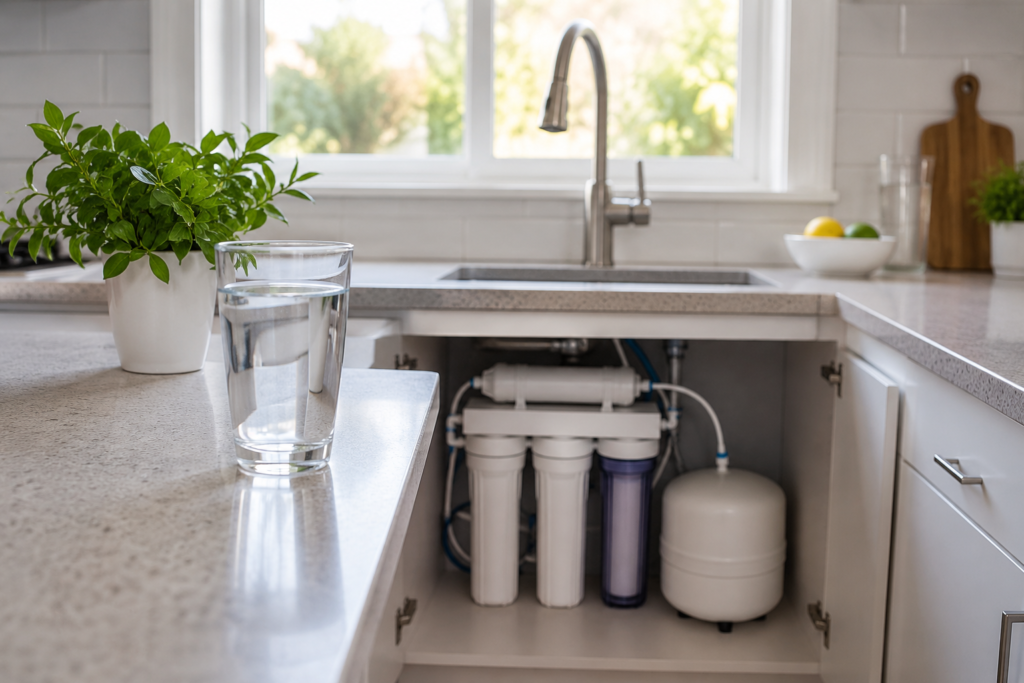
Table of Contents
Do Water Filters Remove Nitrates?
Yes, some water filters can remove nitrates, but many cannot. Reverse osmosis systems are among the most effective options for reducing nitrate levels in drinking water. Ion exchange systems and distillation can also remove nitrates, while standard activated carbon filters, water filter pitchers, faucet filters, and most refrigerator filters are generally ineffective.
If testing shows elevated nitrate levels, choosing a filtration system specifically designed to reduce nitrates is essential.
What Are Nitrates?
Nitrates are naturally occurring compounds made up of nitrogen and oxygen. They exist in soil, plants, and water as part of the natural nitrogen cycle. However, human activities can significantly increase nitrate levels, particularly in groundwater.
Common sources include:
- Agricultural fertilizers
- Livestock manure
- Leaking septic systems
- Decaying organic matter
- Stormwater runoff
These substances can seep through the soil and into underground water supplies, especially after heavy rainfall. Homes supplied by private wells are often more vulnerable because groundwater is not treated before it reaches the tap.
One of the biggest challenges is that nitrates are invisible. They don’t affect the taste, smell, or appearance of your water, so a glass containing elevated nitrate levels can look perfectly clean. Without testing, there’s simply no reliable way to know whether nitrates are present.
Why Are High Nitrate Levels a Concern?
Low concentrations of nitrates are common and generally aren’t harmful to healthy adults. Problems occur when nitrate levels become too high.
Infants under six months of age are at the greatest risk because high nitrate levels can reduce the blood’s ability to carry oxygen. This can lead to a rare but serious condition called methemoglobinemia, more commonly known as “blue baby syndrome.”
Pregnant women and people with certain medical conditions may also be advised to avoid drinking water with elevated nitrate levels until it has been properly treated.
The U.S. Environmental Protection Agency (EPA)has established a maximum contaminant level of 10 milligrams per litre (measured as nitrogen) for public drinking water. Public water systems are routinely monitored to meet this standard, but private wells are not.
If you live on a rural property and your family relies on a private well, it’s easy to assume your water is safe because it looks crystal clear. Unfortunately, nitrates can’t be seen, smelled, or tasted, which is why annual testing is so important.
Do Water Filters Remove Nitrates? The Answer Depends on the Filter
No—not all water filters remove nitrates. This is one of the most common misconceptions homeowners have about water filtration.
Different filters are designed to remove different contaminants. A filter that does an excellent job reducing chlorine and improving taste may offer little or no protection against dissolved nitrates.
Here’s how the most common household filtration methods compare.
| Filtration Method | Removes Nitrates? | Typical Household Use |
|---|---|---|
| Reverse osmosis | ✅ Yes | Under-sink drinking water systems |
| Ion exchange | ✅ Yes | Specialty nitrate treatment systems |
| Distillation | ✅ Yes | Countertop water distillers |
| Activated carbon | ❌ No | Water filter pitchers, faucet filters, refrigerator filters |
| Sediment filters | ❌ No | Removes sand, dirt and rust |
| UV purification | ❌ No | Kills microorganisms but does not remove dissolved contaminants |
Choosing the correct filtration technology is far more important than simply buying a water filter. The only way to know whether a system is suitable is to check which contaminants it has been designed and certified to reduce.
Why Reverse Osmosis Is One of the Best Solutions
For most homeowners, reverse osmosis is widely considered one of the most effective ways to reduce nitrates in drinking water.
Reverse osmosis works by forcing water through a semi-permeable membrane with microscopic pores. Water molecules pass through the membrane while many dissolved contaminants, including nitrates, are left behind and flushed away.
Another advantage is that reverse osmosis systems improve overall drinking water quality rather than solving just one problem. Depending on the model, they can also reduce contaminants such as lead, arsenic, fluoride, PFAS, chromium, and excess dissolved minerals.
For homeowners using private wells, this provides an extra level of protection against contaminants that may not be obvious from the appearance or taste of the water.
Regular water testing is still important, but pairing accurate test results with the right filtration system is one of the best ways to ensure your household has clean, safe drinking water.
Choosing the Right Water Filter for Nitrates
If your water test confirms elevated nitrate levels, it’s important to choose a filtration system that’s specifically certified or proven to reduce nitrates. Buying a general-purpose water filter without checking its capabilities can leave you with a false sense of security.
If you’re still asking, “Do Water Filters Remove Nitrates?”, remember that the answer depends entirely on the filtration technology. Choosing a system designed to reduce nitrates is far more important than simply choosing a popular brand.
For most homes, an under-sink reverse osmosis system offers the best balance of performance, affordability, and convenience. It provides treated drinking and cooking water without the cost of installing a whole-house treatment system.
Whole-house nitrate removal systems are available, but they’re usually only necessary when all household water needs treatment or when recommended by a water treatment professional after testing.
Whatever system you choose, always follow the manufacturer’s maintenance schedule. Reverse osmosis membranes and pre-filters need replacing periodically to maintain their effectiveness. A neglected system may no longer perform as intended, even if it initially removed nitrates successfully.
When Should You Test Your Water?
Testing is the only reliable way to know whether nitrates are present in your drinking water.
If your home is connected to a municipal water supply, your water provider regularly monitors nitrate levels to ensure they meet safety standards. However, homeowners with private wells should take a more active approach.
Consider testing your well water:
- At least once each year.
- Before using a new well.
- If you notice changes in the surrounding land use, such as increased farming activity.
- After flooding or heavy rainfall.
- If your septic system has failed or recently been repaired.
- Before preparing infant formula with well water.
If testing shows nitrate levels above the recommended limit, stop using the water for drinking, cooking, or preparing infant formula until you have a confirmed safe alternative or an appropriate treatment system that has been installed and verified through follow-up testing.
Frequently Asked Questions
Can a Brita Pitcher Remove Nitrates?
No. Standard Brita pitchers and most activated carbon water filter pitchers are designed to improve taste and reduce contaminants such as chlorine. They are not intended to remove dissolved nitrates.
Does boiling water remove nitrates?
No. Boiling water does not remove nitrates. In fact, as water evaporates during boiling, the concentration of nitrates can actually increase slightly.
Are nitrates only found in well water?
No. Nitrates can occur in both private wells and public water supplies. However, elevated nitrate levels are much more common in private wells because they are not routinely monitored or treated like municipal water systems.
Is reverse osmosis the best option for removing nitrates?
For most homeowners, yes. Reverse osmosis is one of the most effective and widely available household filtration methods for reducing nitrates in drinking water. Choosing a quality system and maintaining it properly helps ensure consistent performance.
Recommended Water Filter
If your water has elevated nitrate levels, a quality under-sink reverse osmosis system is one of the most effective solutions available for most homes.
Recommended product: APEC Water ROES-50X 5-Stage Under Sink Reverse Osmosis Water Filter System
Why it’s a good choice:
- The manufacturer lists nitrate among the contaminants the system is designed to reduce.
- Five-stage reverse osmosis filtration helps reduce a wide range of dissolved contaminants while improving drinking water quality.
- Includes an extra replacement pre-filter set for added value and longer service between purchases.
- Trusted APEC Water Systems brand with thousands of positive homeowner reviews.
- Straightforward installation with long-lasting filters designed for reliable everyday performance.
Learn More About Choosing a Water Filter
If you’re comparing different types of filtration systems or aren’t sure which option is right for your home, read our complete guide:
Best Water Filter for Home Use
It explains the strengths and limitations of the most popular water filtration systems and can help you choose the best solution for your water quality concerns.
Final Thoughts
Some water filters can remove nitrates—but only when they use technology designed for the job. Finding nitrates in your drinking water can be worrying, but the problem can usually be managed with accurate testing, appropriate treatment, and regular system maintenance.
The first step is always to test your water. Once you know what’s in it, you can choose a treatment method that’s designed to address the specific contaminants affecting your home.
For many households, especially those using private wells, a reverse osmosis system offers an effective and reliable way to reduce nitrates while improving the overall quality of drinking water. Combined with regular testing and routine filter maintenance, it can provide confidence that the water your family drinks every day is as safe as possible.