If your kettle is constantly coated with white deposits, your shower screen never seems to stay clean, or your dishes come out of the dishwasher covered in water spots, your home’s water could be the reason.
Hard water and soft water are both generally safe to drink, but they behave very differently around your home. The minerals found in hard water can gradually affect plumbing, household appliances, cleaning, and even how your skin and hair feel after a shower. Soft water avoids many of these issues, but it isn’t automatically the best choice for every household.
Hard water contains high levels of calcium and magnesium, while soft water contains very little of these minerals. The biggest differences are limescale build-up, cleaning performance, appliance efficiency, and ongoing household maintenance.
Understanding the difference helps you decide whether you simply need to live with your local water supply, install a water softener, or choose a water filter that solves a different problem altogether.
In this guide, we’ll explain the seven biggest differences between hard water and soft water, how they affect everyday life, and what homeowners should consider before spending money on water treatment.
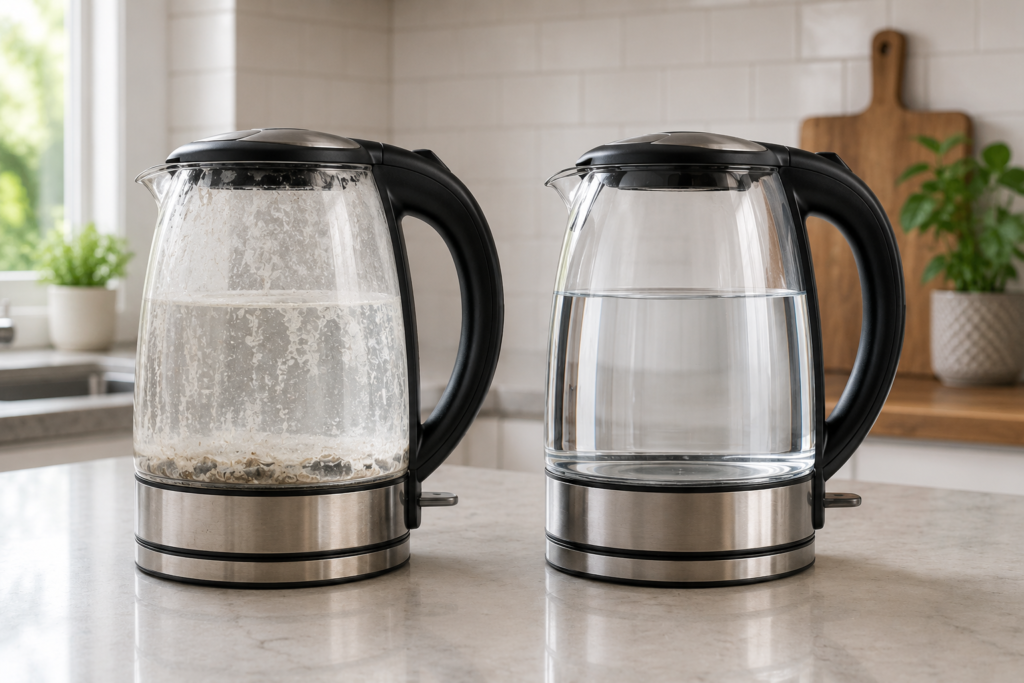
Table of Contents
Hard Water vs Soft Water at a Glance
| Feature | Hard Water | Soft Water |
|---|---|---|
| Mineral content | High calcium and magnesium | Very low calcium and magnesium |
| Limescale | Builds up over time | Little to none |
| Soap lather | Reduced | Better lather |
| Cleaning | More water spots and soap scum | Easier cleaning |
| Appliances | Scale can reduce efficiency | Less mineral build-up |
| Plumbing | Scale may accumulate | Minimal scaling |
| Taste | Slight mineral taste | Cleaner, milder taste |
Although the differences look simple on paper, those minerals influence almost everything water touches inside your home.
What Is Hard Water?
Hard water contains higher levels of dissolved minerals, mainly calcium and magnesium.
As rainwater passes through underground rock such as limestone and chalk, it naturally dissolves these minerals before reaching reservoirs or underground aquifers. By the time it arrives at your tap, it may contain enough calcium and magnesium to be classified as hard water.
Hard water is extremely common throughout many parts of the world and is generally considered safe to drink. In fact, calcium and magnesium are beneficial minerals, although drinking water contributes only a small amount towards your daily intake.
The biggest issue isn’t health—it’s what those minerals leave behind inside your home.
Whenever hard water evaporates or is heated, small amounts of calcium and magnesium remain behind. Over months and years these deposits gradually build into the familiar white, chalky substance known as limescale.
If you’ve ever had to descale a kettle or scrub stubborn marks from a shower screen, you’ve already seen hard water in action.
What Is Soft Water?
Soft water contains very little calcium and magnesium.
Some homes naturally receive soft water because their local water source contains fewer dissolved minerals. Other homes produce soft water using a water softener.
A water softener doesn’t work like a traditional water filter. Rather than removing contaminants such as chlorine, lead, or bacteria, it removes the minerals responsible for water hardness through a process called ion exchange. Calcium and magnesium are replaced with sodium or potassium ions, producing water that behaves quite differently during everyday household tasks.
Many homeowners notice the change almost immediately. Soap lathers more easily, glassware comes out cleaner, taps stay shiny for longer, and appliances develop far less scale.
1. Mineral Content Is the Foundation of Every Difference
Nearly every difference between hard water and soft water can be traced back to one thing: the amount of dissolved calcium and magnesium.
These minerals are harmless for most people, but they change how water behaves throughout your home.
Imagine two identical kitchens. One receives naturally soft water, while the other has very hard water. After a few months, the kitchen with hard water is more likely to have white deposits around the tap, mineral build-up inside the kettle, and cloudy marks on drinking glasses. The kitchen supplied with soft water may still need regular cleaning, but mineral deposits are far less likely to become a constant battle.
Because the minerals remain dissolved until the water evaporates, every hot shower, kettle, dishwasher cycle, and load of laundry leaves behind tiny traces. Individually they’re almost invisible, but over the years they become one of the defining characteristics of a hard water home.
2. Hard Water Creates Limescale That Can Affect Your Home
For many homeowners, limescale is the most frustrating consequence of hard water.
It usually starts as a thin white film around taps or shower heads before gradually becoming a harder deposit that requires scrubbing or descaling products to remove.
The same process also happens inside appliances where you can’t see it.
Common places where limescale builds up include:
- Electric kettles
- Coffee machines
- Dishwashers
- Washing machines
- Shower heads
- Hot water cylinders
- Water heaters
- Household plumbing
Besides looking untidy, limescale can also reduce appliance efficiency.
For example, a heating element covered in mineral deposits has to work harder to transfer heat into the water. Over time this can increase energy consumption and place additional strain on the appliance.
That doesn’t mean every home with hard water will experience expensive repairs, but homes in areas with consistently hard water often require more regular maintenance than those supplied with naturally soft water.
3. Soap Works Very Differently in Hard and Soft Water
One of the quickest ways to notice the difference between hard and soft water is when washing your hands, showering, or doing the dishes.
Soap reacts with calcium and magnesium in hard water before it can clean effectively. Instead of producing a rich lather, some of the soap combines with these minerals to form the familiar residue known as soap scum.
If you’ve ever found yourself using extra dishwashing liquid, noticed streaks on shower tiles, or struggled to rinse shampoo from your hair, hard water may be contributing to the problem.
Soft water behaves differently because there are very few hardness minerals competing with the soap. As a result, soaps and detergents lather more easily, rinse away more cleanly, and often require less product to achieve the same cleaning result.
For many homeowners, this everyday improvement is one of the biggest practical advantages of soft water.
4. Hard Water Can Reduce Appliance Efficiency
Most homeowners expect to replace appliances eventually, but hard water can shorten their efficient working life if mineral build-up isn’t managed.
Every time hard water is heated, tiny amounts of calcium and magnesium can settle on heating elements and internal components. Over time, these deposits make appliances work harder because heat cannot transfer as efficiently through the layer of scale.
Appliances most commonly affected include:
- Water heaters and hot water cylinders
- Dishwashers
- Washing machines
- Electric kettles
- Coffee machines
This doesn’t mean every appliance will fail early, but regular descaling becomes much more important in areas with hard water. Following the manufacturer’s maintenance recommendations can help keep appliances running efficiently for longer.
Soft water greatly reduces this type of mineral build-up, which is one reason many homeowners in hard water areas choose to install a water softener.
5. Hard Water Can Affect Your Skin and Hair
Although hard water isn’t harmful, many people notice a difference after bathing.
The minerals in hard water can make it more difficult to rinse soap and shampoo completely from your skin and hair. Some people describe their skin as feeling tight or dry after showering, while others notice their hair feels dull or less manageable.
These effects vary from person to person, and not everyone experiences them.
Soft water allows soaps and shampoos to rinse away more easily, often leaving skin feeling smoother and hair feeling softer. While it isn’t a medical treatment for skin conditions, many homeowners simply find it provides a more pleasant washing experience.
6. Cleaning Usually Takes More Effort with Hard Water
Cleaning is one of the areas where homeowners often notice the biggest day-to-day difference.
Hard water commonly leaves behind:
- Water spots on glasses
- White marks around taps
- Soap scum on shower screens
- Residue on bathroom tiles
- Streaks on stainless steel sinks
These marks aren’t usually difficult to prevent, but they often require more frequent cleaning.
Soft water leaves far fewer mineral deposits, making it easier to keep kitchens and bathrooms looking clean with less effort.
If you’ve ever cleaned your shower only to find white marks returning a few days later, hard water is likely playing a part.
7. The Best Choice Depends on Your Home
Many people ask whether hard water or soft water is “better.”
The truth is that neither is automatically the right choice for every household.
If your local water causes very little scale, your appliances work well, and cleaning isn’t a constant frustration, there may be little benefit in installing a water softener.
On the other hand, if you’re regularly descaling kettles, replacing shower heads, dealing with cloudy glassware, or noticing heavy mineral deposits throughout your home, reducing water hardness may save both time and maintenance over the long term.
The best solution depends on your local water supply, your home’s plumbing, and the problems you’re actually trying to solve.
Should You Install a Water Softener?
A water softener is worth considering if:
- Your home has consistently hard water.
- Limescale is becoming difficult to manage.
- You want to help protect appliances from mineral build-up.
- You’re tired of cleaning soap scum and water spots.
However, remember that a water softener is designed to remove hardness minerals. It does not replace a drinking water filter if your goal is to reduce contaminants such as chlorine, lead, PFAS, or bacteria.
If you’re unsure whether your water is actually hard, check your local water supplier’s water quality report or use an inexpensive home water hardness test kit before investing in treatment equipment.
Frequently Asked Questions
Is hard water safe to drink?
Yes. Hard water is generally considered safe to drink for most people. The calcium and magnesium it contains are naturally occurring minerals.
How do I know if my home has hard water?
Common signs include white limescale around taps, cloudy glassware, soap that doesn’t lather well, and frequent mineral deposits inside kettles or coffee machines. A simple water hardness test kit or information from your local water supplier can confirm your water hardness.
Does boiling hard water make it soft?
No. Boiling may reduce temporary hardness in some situations, but it doesn’t remove all dissolved minerals or permanently soften the water.
Can a water filter remove hardness?
Most standard water filters are not designed to soften water. If reducing water hardness is your goal, you’ll generally need a dedicated water softener or a filtration system specifically designed for that purpose.
When comparing Hard Water vs Soft Water, most homeowners are trying to reduce limescale rather than improve drinking water. Understanding the difference helps you choose the right solution for your home.
Our Recommendation
If hard water is causing persistent limescale, extra cleaning, and mineral build-up throughout your home, the Aquasana SimplySoft® 40,000 Grain Water Softener is an excellent option for many households. It’s designed to reduce hard water minerals throughout your entire home, helping protect plumbing and appliances while making cleaning easier and improving the feel of water for everyday use.
If you’re comparing Hard Water vs Soft Water because of ongoing limescale problems, a quality water softener may be worth considering. If your main concern is cleaner drinking water rather than mineral build-up, a water filter may be the better choice.
For homeowners who are primarily concerned about improving drinking water quality rather than reducing hardness, choosing the right water filtration system may be the better solution.
Learn More
If you’re still choosing between different filtration systems, read our guide to Best Water Filter for Home Use, to compare the best options for different household needs.
For additional information about water quality and drinking water standards, visit the U.S. Environmental Protection Agency (EPA), which provides reliable guidance on water quality and household water issues.
Final Thoughts
Neither hard water nor soft water is automatically the better choice. The right option depends on your local water supply, your home, and the problems you’re trying to solve.
For many homeowners, hard water is little more than a minor inconvenience. For others, especially in areas with very high mineral levels, it can lead to constant cleaning, appliance maintenance, and unwanted limescale throughout the home.
Understanding your local water supply is the first step. Once you know whether hard water is actually causing problems in your home, you can decide whether simple maintenance, a water softener, or a dedicated water filter is the most practical solution.
Choosing between Hard Water vs Soft Water isn’t about finding a winner. It’s about understanding which type of water best suits your home and whether treating hard water will provide real benefits.
Making the right choice isn’t about chasing the “perfect” water—it’s about finding the solution that best fits your home, your budget, and the way you use water every day.