Are water filter pitchers worth it? For many households, water filter pitchers are an affordable and convenient way to improve drinking water taste and reduce certain contaminants without installing a larger filtration system.
However, they also have limitations compared with advanced systems like reverse osmosis or under-sink filters. Understanding the pros, cons, and filtration capabilities can help you decide whether a water filter pitcher is the right choice for your home.
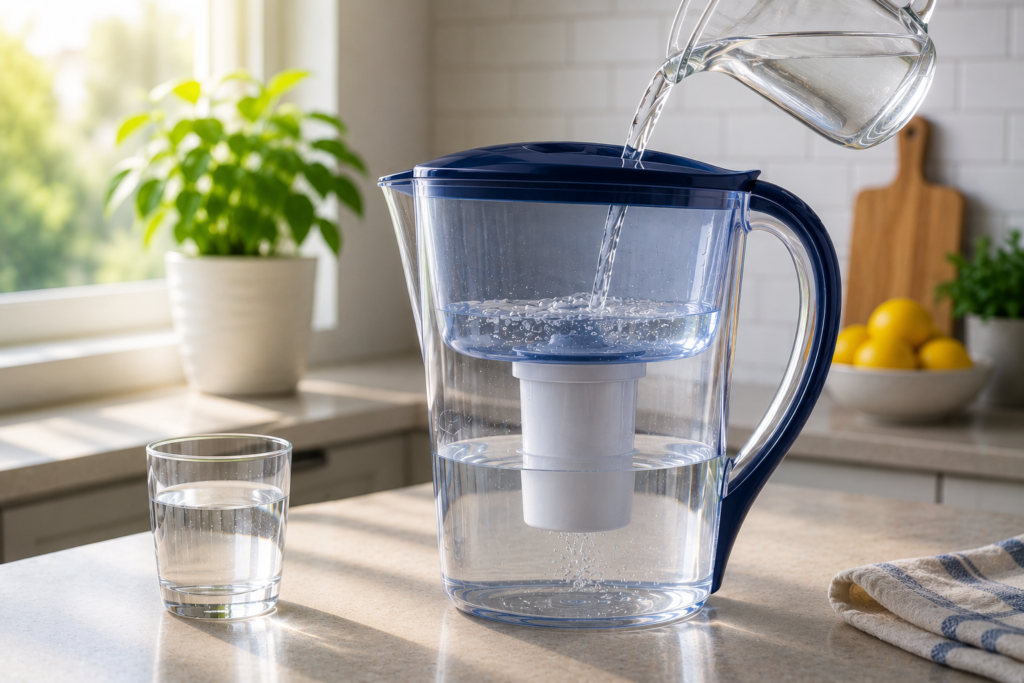
Table of Contents
What Is a Water Filter Pitcher?
A water filter pitcher is a simple filtration device that sits in your refrigerator or on your countertop. You pour tap water into the top chamber, and gravity pulls the water through a filter cartridge.
The filter helps reduce contaminants such as:
- chlorine
- sediment
- some heavy metals
- chemicals that affect taste and odor
The filtered water then collects in the lower chamber, ready to pour.
Pros of Water Filter Pitchers
Many homeowners choose water filter pitchers because they are simple, affordable, and easy to use without professional installation.
Easy to Use
Most pitchers require no installation. You simply fill them with tap water and place them in your fridge or on your countertop. This makes them one of the easiest filtration options for renters and smaller households.
Affordable
Compared with under-sink filtration systems, pitchers are inexpensive. Replacement filters are also relatively affordable, making them a practical entry-level option for improving drinking water quality.
Improves Taste
Many people notice that filtered water tastes better because chlorine and other chemicals are reduced. This can make tap water more pleasant to drink, especially in areas with strong chlorine taste or odor.
Portable
Because they are not installed in plumbing, water filter pitchers can easily move with you if you relocate. They are also useful for apartments, offices, dorm rooms, and temporary living situations.
Cons of Water Filter Pitchers
While pitchers can be helpful, they also have some limitations.
Slower Filtration
Water passes through the filter slowly, so it may take several minutes to filter a full pitcher. This can become inconvenient for larger households that use a lot of drinking water each day.
Limited Filtration
Most pitchers focus mainly on taste and basic contaminant reduction. They usually do not remove as many contaminants as advanced systems like reverse osmosis.
Frequent Filter Replacement
Filters must be replaced regularly to keep the pitcher working properly. Most manufacturers recommend replacing filters every few months depending on water usage and filter type.
Are Water Filter Pitchers Effective?
Many homeowners ask whether water filter pitchers are worth it for improving drinking water quality. In many cases, they can be an effective and affordable option for reducing chlorine taste and improving everyday drinking water.
However, they are best suited for:
- basic water improvement
- small households
- renters who cannot install larger filtration systems
If your water contains higher levels of contaminants, a more advanced filtration system may be necessary.
Water Filter Pitchers vs Other Filtration Systems
Compared with other filtration options, pitchers offer convenience but less filtration power.
For example:
- reverse osmosis systems remove a wider range of contaminants
- under-sink filters provide continuous filtered water
- whole-house systems filter water for the entire home
You can also compare advanced filtration systems in our guide to reverse osmosis vs carbon water filters.
Each option serves different needs depending on water quality and household size.
If you’re wondering how long water filters last, it’s helpful to understand that replacement schedules can vary depending on the type of filtration system you use.
What to Look for in a Water Filter Pitcher
When choosing a water filter pitcher, it is important to check which contaminants the filter is certified to reduce. Some pitchers mainly improve taste and odor, while others can reduce lead, chlorine, and certain heavy metals.
Choosing a pitcher with NSF certifications can help ensure the filter has been independently tested for performance and safety.
Final Thoughts
For many households, water filter pitchers can provide an affordable and convenient way to improve drinking water quality.
However, they may not provide the same level of filtration as larger water purification systems.
For many households, a pitcher can be a good starting point before upgrading to a more advanced filtration system.
If you’re comparing different filtration options, our guide to the best water filter for home use explains the most effective systems for improving drinking water quality.